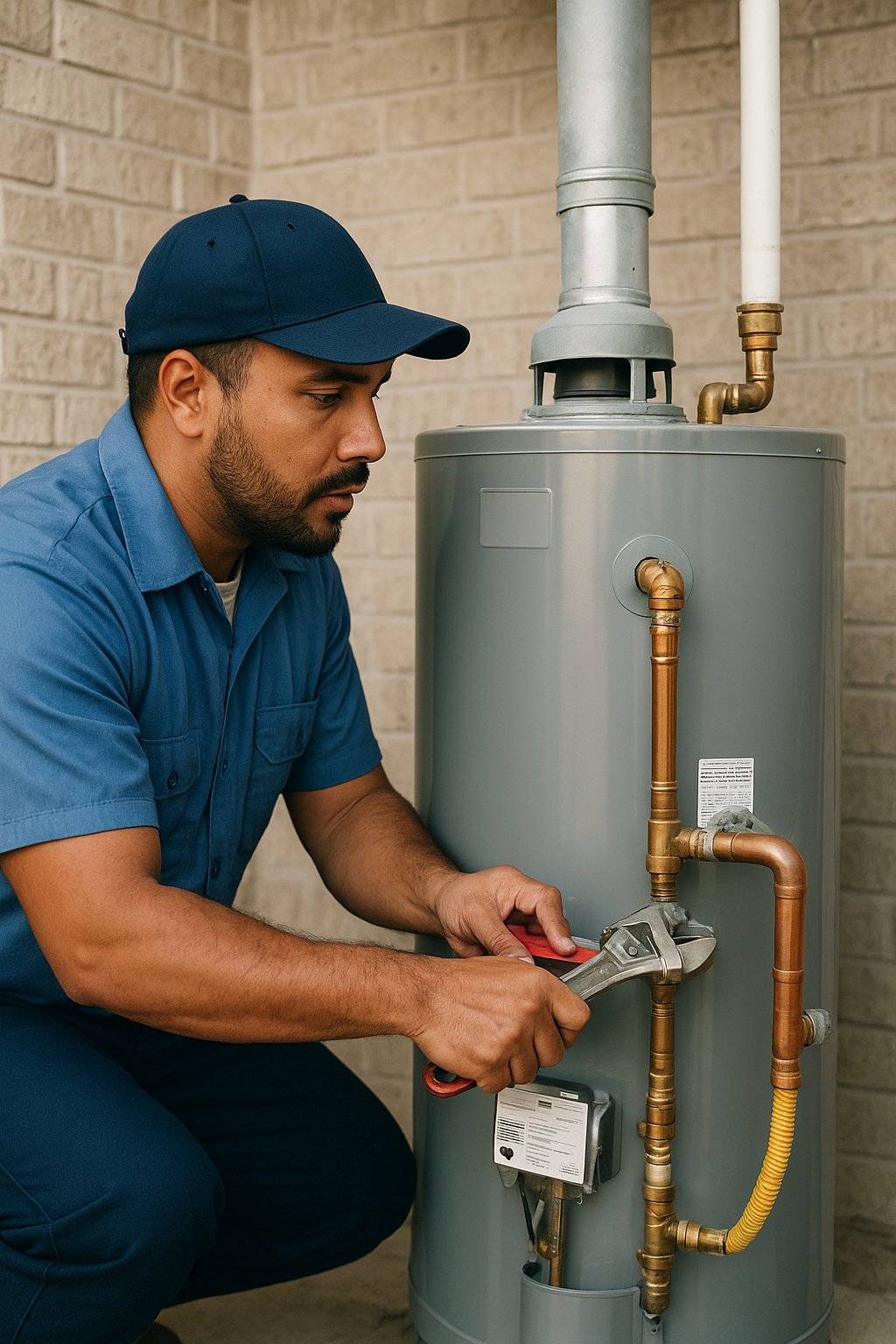
Houston’s subtropical climate brings hot humid summers that accelerate corrosion on water heater tanks and connections, especially in older housing stock found in the Heights and Montrose. Mild winters reduce freeze risk but allow sediment from the region’s mineral-rich water to build up faster than in drier climates. Homes in these neighborhoods often have original or early-replacement units that develop leaks at the dip tube or anode rod before the expected lifespan is reached.
Technicians working in River Oaks and Midtown routinely encounter 20- to 30-year-old tanks that were never flushed, leading to restricted flow and higher energy use. Downtown high-rises and townhomes present different challenges with shared venting and limited access that requires coordination with building management. Katy, Sugar Land and Pearland customers face similar water chemistry issues plus longer drive times that affect same-day response during peak summer demand.
Repair work here focuses on replacing failed gas control valves, electric elements and thermostats while inspecting for code-compliant venting and expansion tanks required in Harris County. Technicians carry common parts for both standard and power-vent models because next-day shipping from suppliers can delay jobs in older neighborhoods where weekend failures are common.
Proper diagnosis prevents unnecessary full replacements when a sediment flush or anode rod swap restores performance. Homeowners in these areas benefit from upfront explanations of what the repair will and will not fix given the age and condition of the existing unit.
Technician insight
In Houston the thing that catches most people out with Water Heater Repair is how quickly sediment builds in tanks that have never been flushed, especially in pre-1990 homes in the Heights where the original units still sit in tight utility closets with poor access.
Montrose Bungalow No Hot Water
A 1970s home in Montrose lost hot water after the lower electric element failed. Inspection showed heavy sediment and a depleted anode rod. The element and anode were replaced and the tank flushed, restoring full capacity without replacing the entire unit.
Water Heater Repair Services We Offer
✓Electric Element Repairs
Replace burned-out upper or lower elements and test thermostats on electric water heaters common in Midtown and Downtown condos.
✓Gas Control Valve Repairs
Diagnose and replace faulty gas valves on natural gas units found in Heights and Montrose bungalows to restore safe ignition and temperature control.
✓Anode Rod Replacement
Install new magnesium or aluminum anode rods to slow tank corrosion accelerated by Houston’s mineral-heavy water supply.
✓Sediment Flushing Service
Remove built-up mineral deposits from tanks in older River Oaks and Heights homes to improve recovery time and reduce noise.
✓Thermostat Replacement
Swap defective thermostats on both gas and electric models to maintain consistent hot water temperatures during humid summer months.
✓Leak Detection and Repair
Locate and stop leaks at connections, relief valves or tank seams before they damage flooring in compact Montrose and Midtown properties.
Water Heater Repair Cost in Texas
| Service | Typical Range | What Affects It |
|---|---|---|
| Diagnostic Visit | $95–$150 | Waived if repair is performed same day |
| Electric Element Replacement | $180–$320 | Price varies by access and whether both elements are replaced |
| Gas Control Valve Replacement | $250–$450 | Higher when venting modifications are required |
| Anode Rod Replacement | $140–$260 | Includes flush; tank access in older homes can increase time |
| Thermostat Replacement | $160–$280 | Electric models usually lower; gas models higher due to valve integration |
Ranges are typical for Texas and confirmed with an exact written quote before any work starts.
How it works
- 1
Initial Assessment
Technician arrives at the Houston address and checks for active leaks, unusual noises and temperature inconsistencies while noting the unit’s age and location.
- 2
Component Testing
Gas pressure, element resistance and thermostat function are measured to isolate the exact failure point without guessing.
- 3
Repair Execution
Failed parts are replaced using compatible components, followed by a full system flush and safety check of venting and pressure relief.
- 4
Final Verification
Hot water temperature and recovery are confirmed at multiple fixtures before the job is complete and the homeowner receives a written summary.
Pricing
Most repairs fall between diagnostic fee and part replacement cost; exact price depends on unit age, access and parts needed.