Houston's older neighborhoods such as the Heights and Montrose feature many 1950s-1970s homes with narrow utility closets and galvanized piping that often needs updating during water heater installation. Installers must account for the subtropical humidity that speeds exterior corrosion on tanks, especially in vented garages or attics common in these areas. Proper seismic strapping is rarely required here, but flood-zone considerations in parts of Midtown and Downtown mean elevating units or using corrosion-resistant materials becomes necessary on certain streets.
Gas line sizing and venting calculations change with Houston's mild winters and occasional hard freezes that can affect exhaust paths. In River Oaks and nearby sections of Harris County, larger homes often require 80-gallon or tankless units to meet simultaneous demand from multiple bathrooms. Electric models installed in Sugar Land or Pearland properties frequently need dedicated 30-amp circuits and updated panels because many 1980s builds still run on 100-amp service.
Code enforcement in Houston requires permits for new installations, and inspectors check for proper expansion tanks and temperature-pressure relief valve discharge lines routed to safe locations. Homeowners in Katy and Pearland sometimes face additional requirements when tying into municipal water supplies that carry higher mineral content, leading to earlier sediment buildup if the new unit lacks a powered anode rod.
Technician insight
In Houston the thing that catches most people out with water heater installation is the combination of high humidity and older galvanized supply lines in Heights and Montrose homes; those lines often fail during the swap and force an unplanned repipe that changes the whole job timeline.
Heights Bungalow Tank Replacement
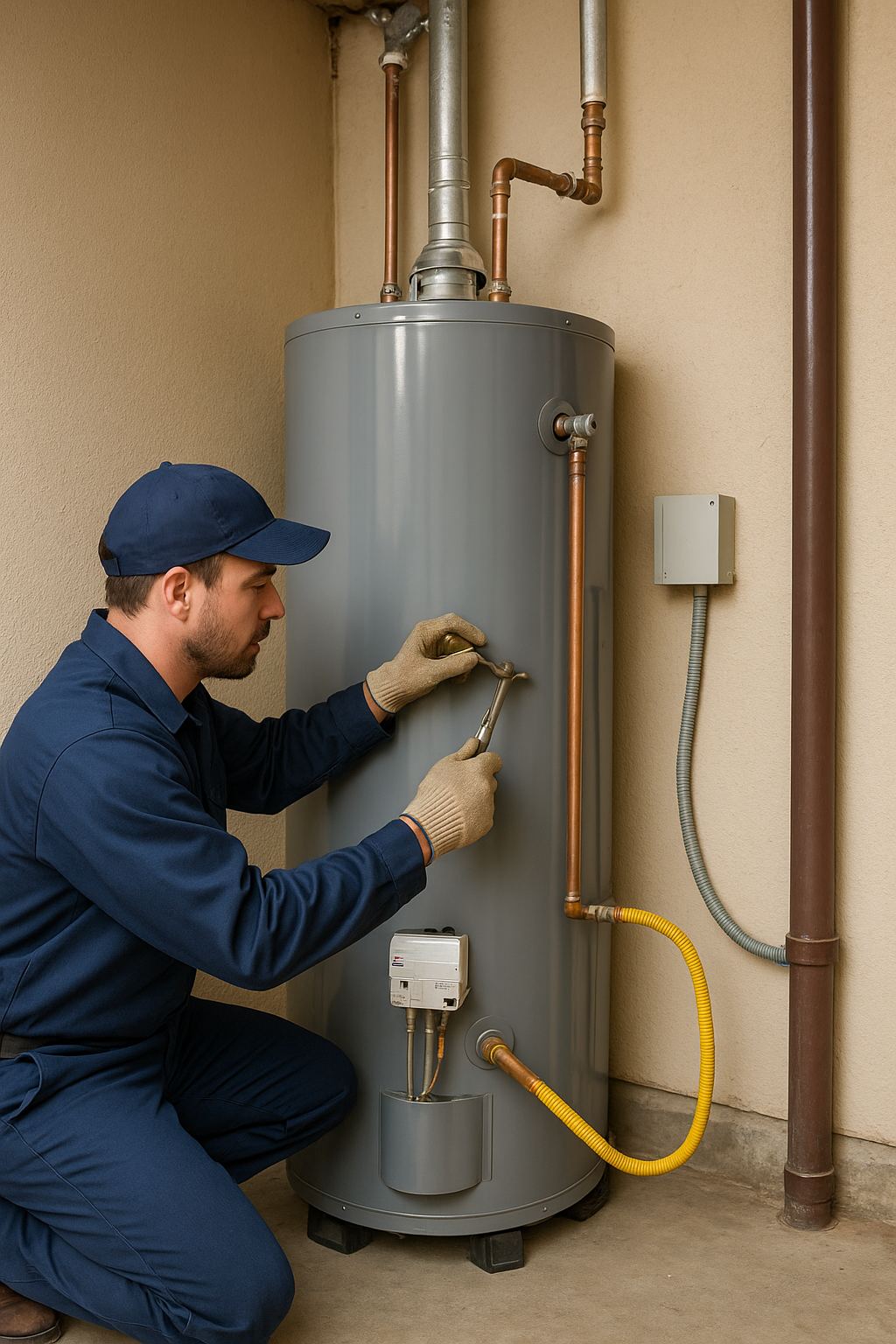
The existing 50-gallon gas unit in a 1960s Heights home had corroded through the bottom and was leaking into the utility closet. We found undersized venting and a missing expansion tank during assessment. After pulling the permit we installed a 50-gallon high-recovery model with new copper flex lines and proper T&P routing to the exterior. The homeowner now has reliable hot water without attic humidity issues.
Water Heater Installation Services We Offer
✓Tankless Water Heater Installation
Converting from tank to tankless systems sized for Houston household demand while upgrading gas lines to handle simultaneous showers in older Heights homes.
✓Standard Tank Water Heater Installation
Replacing 40- to 80-gallon tanks in Montrose and Midtown properties, including removal of corroded units and reconnection to existing venting and water lines.
✓Electric Water Heater Installation
Installing or swapping electric models in River Oaks condos and Downtown apartments where gas service is unavailable or panels need upgrading for 30-amp circuits.
✓High-Efficiency Condensing Installation
Fitting condensing gas units in Sugar Land and Pearland homes to reduce energy use while managing condensate drainage in humid conditions.
✓Garage or Attic Relocation Installation
Moving units from interior closets to garages or attics in Katy homes to improve access and reduce living-space heat load during Houston summers.
Water Heater Installation Cost in Texas
| Service | Typical Range | What Affects It |
|---|---|---|
| Standard 50-gallon gas tank installation | $900–$1,600 | Higher in narrow-access Heights or Montrose homes needing pipe reroutes. |
| Tankless conversion | $2,200–$3,800 | Includes gas line upsizing often required in pre-1980 Harris County houses. |
| Electric tank installation | $800–$1,400 | Panel upgrades in Downtown or Midtown buildings add to the range. |
| High-efficiency condensing unit | $1,500–$2,500 | Condensate drain routing in humid Houston attics affects final cost. |
Ranges are typical for Texas and confirmed with an exact written quote before any work starts.
How it works
- 1
Site Assessment
Measure existing connections, check gas or electric service capacity, and note access constraints typical in Heights bungalows and Montrose townhomes.
- 2
Unit Selection and Permitting
Match capacity to household needs, select corrosion-resistant models for local humidity, and pull required Harris County permits before work begins.
- 3
Removal and Preparation
Safely drain and disconnect the old unit, update piping or venting where galvanized lines or undersized vents are found in older Houston stock.
- 4
Installation and Testing
Set the new unit, connect lines, install expansion tank and T&P discharge, then test for leaks and proper operation under local water pressure.
Pricing
Prices vary by unit type, access difficulty, and any required line upgrades common in older Houston neighborhoods.